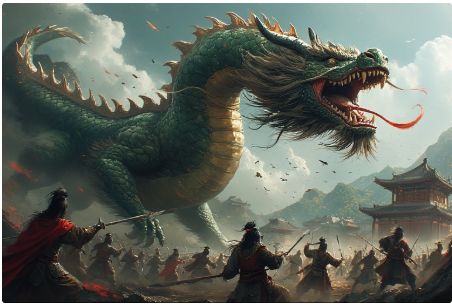
Chinese Dragons (Lóng, 龙) are cosmic guardians that protect the vulnerable. There’s no better analogy for the Affordable Care Act (ACA). After decades of fighting between capitalists and socialists resulting in no solutions, a hybrid plan was finally devised, as if out of the cosmos and it was signed into law to help millions of vulnerable Americans access healthcare by finally making insurance affordable for them.
But no mythological tale goes without conflict which is ever-present in the moral realities bing symbolized. Indeed, as soon as the ACA had been conceived, Republicans declared war and that war has dragged on for 15 years. In that time, the Republicans failed to block the plan from becoming a law and since then, they have tried multiple times but failed to repeal the law. They tried to convince everyone that the ACA is a tax-devouring beast but they weren’t convincing enough people and it was starting to look like they just couldn’t kill that beast.
But then in 2017, one of them became the President of the United States and the strategy changed. Instead of trying to convince the legislators representing The People to repeal the law, they can use the power of the executive to do whatever they could to sabotage it. Maybe if they can break it first, they can convince the The People to lose faith.
In case you’re starting to think I’m talking about dragons and mythology, here is an actual account of these commitments to sabotage…
Individual Mandate Penalty was Essentially Eliminated (2017)
Originally, the ACA required most Americans to carry health insurance or pay a tax penalty to encourage broad participation (especially healthy people). The Tax Cuts and Jobs Act of 2017 reduced that penalty to $0 starting in 2019 to pass with a simple majority under budget rules.
So… car insurance is mandatory and no one seems to have a problem with that. But mandatory health insurance was met with a vicious army of Republicans screaming about how unconstitutional it is. And yes, they found a way to eliminate it.
The reason why ANY insurance would be mandatory is to insure a greater participation in the program which would create a much larger pool of money to cover the claims. That’s WHY car insurance is mandatory. If it wasn’t, our premiums would all skyrocket because there would be less money in the risk pool forcing insurance companies to take more from the people who DO have polices to cover existing claims.
Cost-Sharing Reduction Subsidies Stopped (2017)
The ACA originally included cost-sharing reduction (CSR) payments that lowered deductibles and copays for people with lower incomes. The Trump administration stopped these payments in 2017 after a Republican-led lawsuit challenged them.
Insurers then increased premiums for certain plans to compensate, which then raised subsidy amounts for many enrollees — an awkward twist where the market adjusts but costs still rose.
The CBO estimated that premiums went up ~20% because of ending CSR payments.
Some ACA Taxes Were Repealed (2019)
Three significant ACA funding taxes were repealed by Republicans
• The “Cadillac tax” on expensive employer plans
• The medical device tax
• The health insurance provider tax
These taxes provided revenue that helped fund ACA programs. Repealing them reduced federal funding tied to the ACA and made the overall financing less robust.
Regulatory Changes Under the Trump
Republican leadership in the Department of Health and Human Services has pursued rules that shorten enrollment periods, add fees, and impose stricter documentation requirements for subsidies and eligibility.
These administrative moves functionally make it harder for people to enroll and keep coverage — especially lower-income individuals and those with changing incomes.
Medicaid Expansion and Related Policy Proposals
The ACA expanded Medicaid eligibility to more low-income adults; this was always optional for states, though partially funded by the federal government. Republican proposals often include work requirements and cuts to expansion funding, which would reduce enrollment. Work requirements and funding cuts reduce coverage for people who gained insurance via Medicaid expansion, which was one of the ACA’s biggest coverage gains.
Enhanced Marketplace Subsidies Set to Expire (2025)
The One Big Beautiful Bill (a trojan horse if there ever was one) contained the latest attempt at sabotage by legislating a budget decision to allowing a temporary tax-credit provided to encourage more Americans to get health insurance to expire. Yes, it seems like a small detail, but since the ACA is market-driven, it’s ability to pay for healthcare depends on the number of people buying plans. So if these tax-credits are allowed to expire on Jan 1st 2026, there’s a good chance that the risk-pool will shrink, which will force premiums to go up, which of course makes healthcare LESS affordable.
Senator Bill Hagerty (R-TN) recently argued on the Senate floor that premiums increasing over time is evidence that the ACA is already a failure but the law was never meant to keep premiums from rising and it would be idiotic to expect it. The cost of everything naturally rises over time… trying to stop premiums from going up would be like trying to stop the Earth from spinning. But this is apparently the narrative anyway.
Hagerty also said that Democrats promised the ACA would “make insurance more affordable”, but his loose words failed to describe what Democrats actually did say, which is that the ACA would make insurance “affordable”, not “more affordable”. The difference is significant, because whether ie not something is affordable depends on the prospective buyer. Before the ACA, millions of Americans didn’t have insurance because it wasn’t affordable to THEM. People who did have insurance, had it because it WAS affordable to them.
Between 2013 (before the ACA took effect) and 2021, the number of uninsured people in the U.S. dropped from about 45 million to roughly 28 million. 1 That would seem to indicate that if anything, the ACA was a success… according to what it’s actually supposed to do.
And when the tax-credits do expire, we will see for ourselves what wounds THAT will inflict on the benevolent dragon that has so far sustained 15 years of attacks.
Leave a Reply